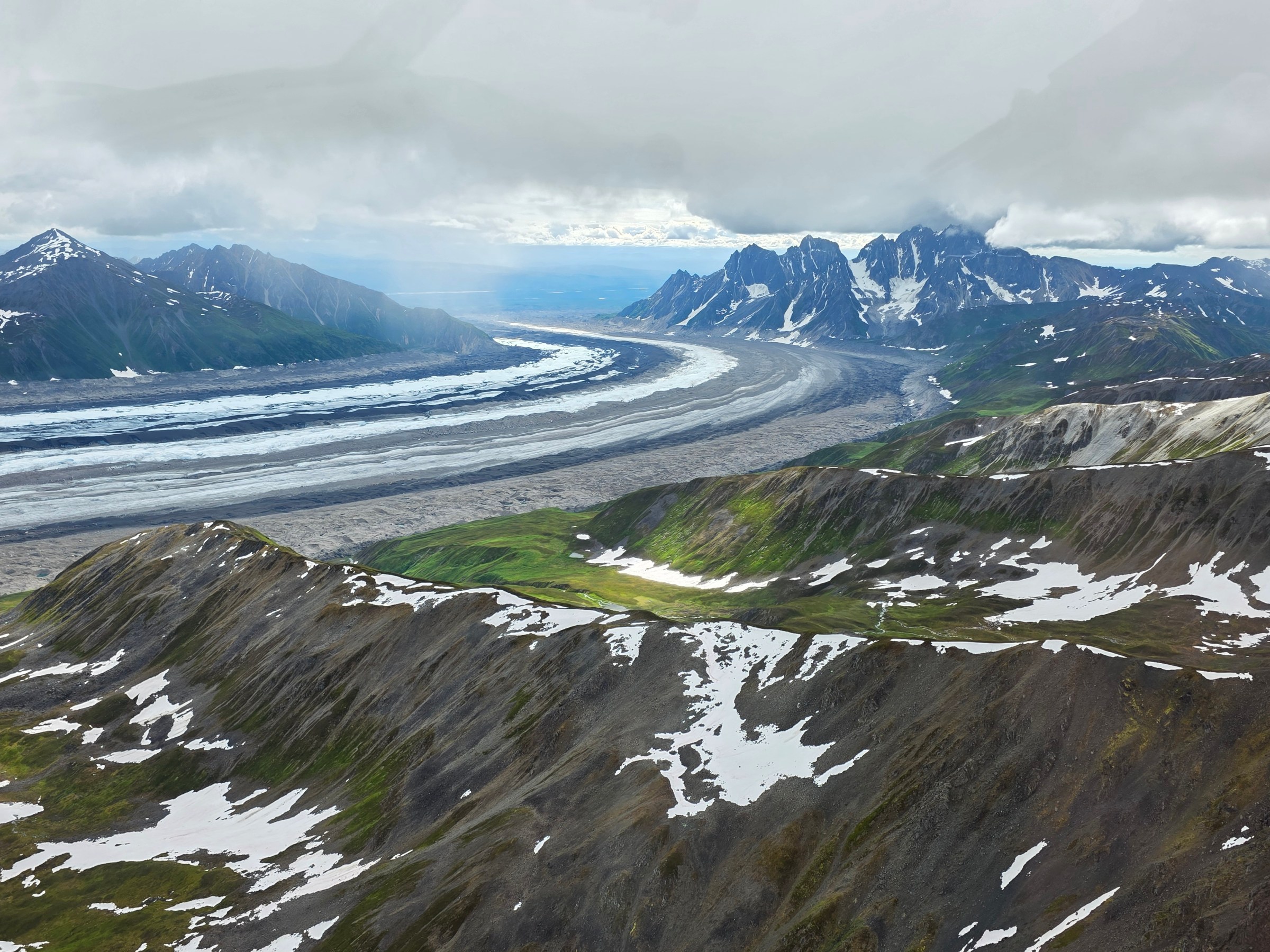
Denali National Park is six million acres of wilderness shaped by glaciers, wildlife, weather, and time. Beyond the famous summit lies a vast landscape of braided rivers, alpine tundra, remote mountain valleys, and some of the wildest terrain left in North America.
From the air, the scale of the Alaska Range becomes easier to understand — glaciers stretching for miles beneath snow-covered peaks while weather and ice continue shaping the mountains every season.
Why Denali Was Protected
Denali National Park was originally established in 1917 to help protect Dall sheep and the surrounding wilderness habitat of the Alaska Range. Conservationists recognized early that this landscape represented one of the last intact wilderness ecosystems in North America.
Today, much of the park remains roadless and undeveloped, allowing wildlife to continue moving across enormous landscapes shaped by migration, weather, and seasonal change.
A Landscape Shaped by Ice
Glaciers define nearly every part of the Alaska Range. Rivers of compressed snow and ice slowly carve valleys through the mountains, shaping the landscape over thousands of years.
Some of the park’s best-known glaciers include the Kahiltna Glacier, Ruth Glacier, Tokositna Glacier, and Muldrow Glacier — each helping form the immense terrain visitors experience today.
Why So Many Visitors Choose to Fly
Much of Denali National Park cannot be reached by road. Flightseeing offers a rare opportunity to experience the scale of the Alaska Range from above — revealing glacier systems, remote valleys, climbing routes, and mountain terrain inaccessible to most visitors.
Flights into the range may include views of the Ruth Gorge, Denali Base Camp, the Don Sheldon Amphitheater, Little Switzerland, and the Kahiltna Glacier.
Talkeetna & Bush Aviation
Talkeetna has long served as a gateway to Denali National Park and the Alaska Range. For generations, bush pilots have connected climbers, researchers, and remote lodges to terrain inaccessible by road.
That aviation culture remains an important part of daily life here and continues shaping how visitors experience the mountains today.
Explore Denali From Above